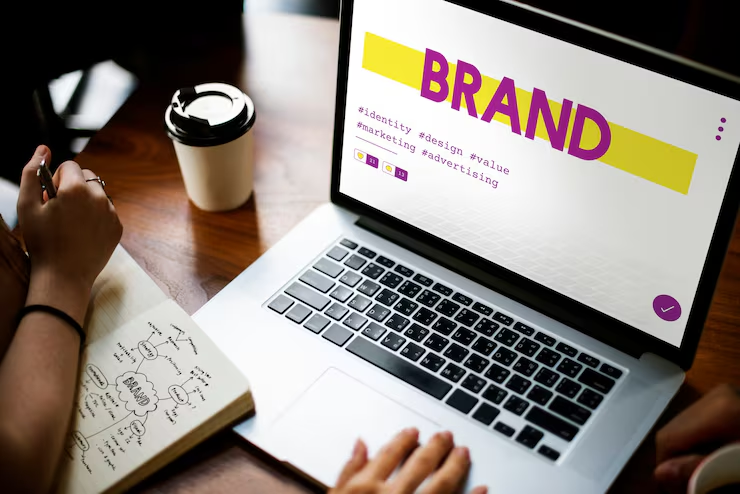
How to Build a Strong Brand Identity That Stands Out in Pakistan, In a competitive market, offering a good product or service is no longer enough. Customers need to recognize your business, trust it, and remember it when they are ready to buy. A strong brand identity helps you achieve exactly that.
Brand identity is more than a logo, colors, or a stylish website. It is the complete way your business presents itself, communicates with customers, and creates a consistent impression across every interaction.
For Pakistani businesses, a clear brand identity can help you stand apart from competitors, build customer trust, support premium pricing, and encourage repeat purchases and referrals.
This guide explains the key steps to creating a brand identity that is distinctive, consistent, and relevant to your target customers.
What Is Brand Identity and Why Does It Matter?
Brand identity is the complete presentation of your business to the market. It includes your logo, colors, typography, imagery, brand voice, values, personality, positioning, and the story behind your business.
When these elements work together, customers can recognize your business more easily and associate it with specific qualities and emotions. When branding is inconsistent, a business can appear generic and less trustworthy.
Brand consistency can also have a measurable business impact. Lucidpress research has reported that consistent brand presentation can contribute to increased revenue compared with inconsistent branding.
For businesses operating in competitive Pakistani markets, consistency should therefore be treated as a business strategy, not simply a design preference.
Step 1: Define What Your Brand Stands For
Before designing a logo or selecting colors, establish the foundation of your brand. Many businesses make the mistake of starting with visual design without first understanding what their brand should communicate.
Start by defining three key areas:
Brand Purpose
Your purpose explains why your business exists beyond making money. It should describe the value you want to create for your customers.
For example, a textile company in Sialkot may aim to promote Pakistani craftsmanship internationally. A healthcare business in Lahore may focus on making quality healthcare more accessible. A technology company in Islamabad may help small businesses compete through better digital tools.
Your purpose does not have to sound extraordinary. It needs to be genuine and useful when making business and branding decisions.
Brand Values
Your values are the principles that guide how your company operates. They influence customer service, hiring, communication, product decisions, and business relationships.
Avoid vague values such as “quality” or “excellent service.” Instead, define values that describe specific actions.
For example:
- We clearly explain all costs before starting a project.
- We respond to customer inquiries within four hours.
- We only recommend products we would use ourselves.
- We communicate honestly about timelines.
Specific values are easier for employees to follow and easier for customers to recognize.
Brand Personality
Think of your brand as a person. How would it speak and behave?
Your business might be:
- Professional and authoritative
- Friendly and approachable
- Bold and energetic
- Creative and unconventional
- Premium and sophisticated
A defined personality helps your website, social media, advertisements, packaging, and customer service maintain the same human character.
Step 2: Understand Your Target Audience
A brand that tries to appeal to everyone often struggles to connect with anyone.
You need to understand exactly who your ideal customers are. Go beyond age, gender, location, and income. Learn what your customers want, what problems they face, what influences their purchasing decisions, and what they expect from businesses in your industry.
For example, a Pakistani fashion eCommerce brand may target women aged 25 to 35 in major cities who want stylish clothing at reasonable prices. They may discover brands through Instagram and TikTok, value modest fashion, and trust businesses that show authentic customer experiences.
This level of audience research makes branding decisions much easier. You can choose your messaging, visual style, content, and communication tone based on what your customers actually care about.
Step 3: Establish Your Brand Positioning
Brand positioning defines how you want customers to perceive your business compared with competitors.
It answers an important question:
Why should customers choose your business instead of another option?
Your positioning could be based on specialization, affordability, quality, convenience, customer experience, transparency, or another meaningful advantage.
For example, instead of being simply another digital marketing agency, a company could position itself as a specialist agency for Pakistani eCommerce businesses.
Your positioning should identify a genuine opportunity in the market and connect it with something your business can deliver consistently.
A positioning statement does not necessarily need to appear word for word in your marketing. Its main purpose is to provide strategic direction for your messaging and brand decisions.
Step 4: Develop a Consistent Brand Voice
Your brand voice determines how your business sounds when communicating with customers.
Whether you are publishing an Instagram post, writing website copy, sending a proposal, or responding to a complaint, your communication should feel like it comes from the same brand.
A consistent voice creates familiarity and trust.
Define your voice using clear characteristics and examples. For instance, your brand may be:
- Clear and confident
- Friendly and conversational
- Professional but approachable
- Educational and helpful
- Direct and practical
Understand Voice and Tone
Your brand voice should remain consistent, while your tone can change according to the situation.
A friendly brand can remain approachable on social media while using more formal language in contracts, legal notices, or business proposals.
The personality remains recognizable, but the tone becomes appropriate for the context.
Step 5: Build Your Visual Brand Identity

Once your strategy is clear, you can create visual elements that represent your purpose, personality, values, and positioning.
Logo Design
Your logo is one of the most recognizable elements of your brand. It should be simple, distinctive, versatile, and easy to identify.
A strong logo should work across different sizes and platforms, from a website favicon to a large outdoor banner. Avoid relying too heavily on temporary design trends that may quickly become outdated.
Brand Colors
Colors influence how people perceive a business and can become a powerful recognition tool.
Choose a primary color supported by one or two secondary colors. Define clear rules for how each color should be used across digital and print materials.
Consistency is more important than simply choosing colors that look attractive.
Typography
Fonts also influence brand personality.
Serif fonts can communicate tradition and authority. Sans-serif fonts often create a modern and clean appearance. Script fonts can communicate creativity or elegance when used appropriately.
Choose one or two primary typefaces and use them consistently across your brand materials.
Photography and Imagery
Your image style should also be recognizable.
Decide whether your brand should use bright and clean photography, dramatic visuals, authentic customer images, documentary-style content, or polished commercial photography.
Apply the chosen style consistently across your website, social media, advertisements, and other marketing channels.
Mark X Media’s digital marketing services help businesses maintain consistent branding across their digital marketing activities.
Step 6: Create Practical Brand Guidelines
Brand guidelines turn your branding decisions into clear instructions that your team can follow.
Your guidelines should explain:
- Logo usage and clear space
- Minimum logo sizes
- Approved and prohibited logo variations
- Primary and secondary colors
- Digital and print color codes
- Typography and font hierarchy
- Photography and imagery style
- Brand voice and messaging examples
The document does not need to be unnecessarily complicated. Its purpose is to make sure employees, designers, agencies, freelancers, and printers can represent your business correctly.
Step 7: Apply Your Identity Everywhere
A strong brand identity only creates value when it is used consistently.
Review every customer touchpoint, including your:
- Website
- Social media profiles
- Email signatures
- Business cards
- Packaging
- Store or office
- Proposals
- Invoices
- Advertisements
- Customer service communication
A different logo on your business card, inconsistent colors on social media, or a completely different communication style across channels can weaken brand recognition.
Your website is especially important because it is often one of the first places potential customers interact with your business. Mark X Media’s website development services can help businesses maintain consistent branding throughout their online presence.
Step 8: Use Storytelling to Build Emotional Connection
Customers remember stories more easily than lists of features.
Your brand story can explain why the company was founded, what problem you wanted to solve, how customers benefit from your work, or what values influence the way you operate.
For example, your story could focus on:
- The founder’s journey
- A customer transformation
- The process behind your products
- Your commitment to quality
- The community you serve
Use this story across your About page, social media, email marketing, website content, and other appropriate channels.
A genuine story can make your business feel more human and help customers form a stronger connection with your brand.
Step 9: Create Meaningful Differentiation
In competitive Pakistani markets, many businesses offer similar products and services. Differentiation gives customers a reason to select your business.
You can differentiate through:
- Industry specialization
- Product quality
- Customer experience
- Faster service
- Transparency
- Unique expertise
- Convenience
- A distinctive business philosophy
Avoid building your entire differentiation strategy around low prices. There will almost always be another competitor willing to charge less.
Long-term differentiation comes from something your business genuinely does better, differently, or more consistently and that your target customers actually value.
Mark X Media’s SEO optimization services can help businesses communicate these advantages to customers searching for solutions online.
Step 10: Protect and Improve Your Brand
Brand identity should evolve as your business grows.
Protect your brand by maintaining consistent guidelines, monitoring how your identity is used, and considering appropriate protection for your business name and visual assets.
At the same time, review your branding periodically. Your audience, market, products, and business goals may change over time.
That does not mean you need a complete rebrand every few years. Often, small refinements to your logo, messaging, visual style, or positioning are enough to keep your brand relevant.
Why Pakistani Businesses Struggle With Branding
Many Pakistani businesses either consider branding an expense reserved for large companies or treat branding as a purely visual project.
Both approaches can create problems.
When businesses lack a clear identity, they often look similar to competitors, compete mainly on price, and struggle to build lasting customer loyalty.
Modern Pakistani customers are increasingly exposed to professional local and international brands. They notice whether a business looks credible, communicates clearly, and maintains consistency across its channels.
A well-developed brand identity can help a business build recognition and create a stronger competitive position over time.
How Mark X Media Helps Businesses Build Strong Brands
Mark X Media helps Pakistani businesses develop brand identities that combine strategic thinking, distinctive design, and consistent digital execution.
The process begins with understanding the business, target audience, market, and competition before moving into branding and communication.
Brand identity is then connected with digital marketing activities across websites, content, social media, search, and advertising so customers receive a consistent experience at every stage.
According to the information provided in the original article, Mark X Media has more than seven years of experience, a 4.8-star rating from more than 1,500 verified clients, and partnerships with Google, Meta, and Microsoft.
Businesses interested in developing a stronger brand presence can visit the Mark X Media contact page to discuss their branding goals and explore the right approach.
Frequently Asked Questions
How much does brand identity development cost in Pakistan?
The cost depends on the scope of the project. A basic identity covering a logo, colors, and typography generally requires less work than a complete project involving brand strategy, positioning, voice development, visual identity, and detailed guidelines.
How long does it take to build a brand identity?
A basic visual identity may take around two to four weeks. A comprehensive identity involving strategy, visual design, messaging, and brand guidelines can take approximately four to eight weeks, depending on the project scope and revisions.
Can a small business afford professional branding?
Yes. Branding can be scaled according to the size and needs of a business. Even a small company can benefit from a clear visual identity, consistent communication, and defined positioning.
What is the difference between a brand and a logo?
A logo is one part of a brand identity. A brand includes the complete experience associated with a business, including its positioning, values, personality, voice, visuals, customer experience, and reputation.
How can I tell whether my brand identity is working?
Look for stronger brand recognition, positive customer feedback, improved customer loyalty, more referrals, greater direct traffic, and stronger confidence in your ability to compete on value rather than price.
How can I get started with Mark X Media?
Start by sharing your business details, branding goals, and current challenges through the Mark X Media contact page. Their team can review your requirements and recommend an appropriate branding approach.